Matt Rice: Living his dream to steward America’s Rivers
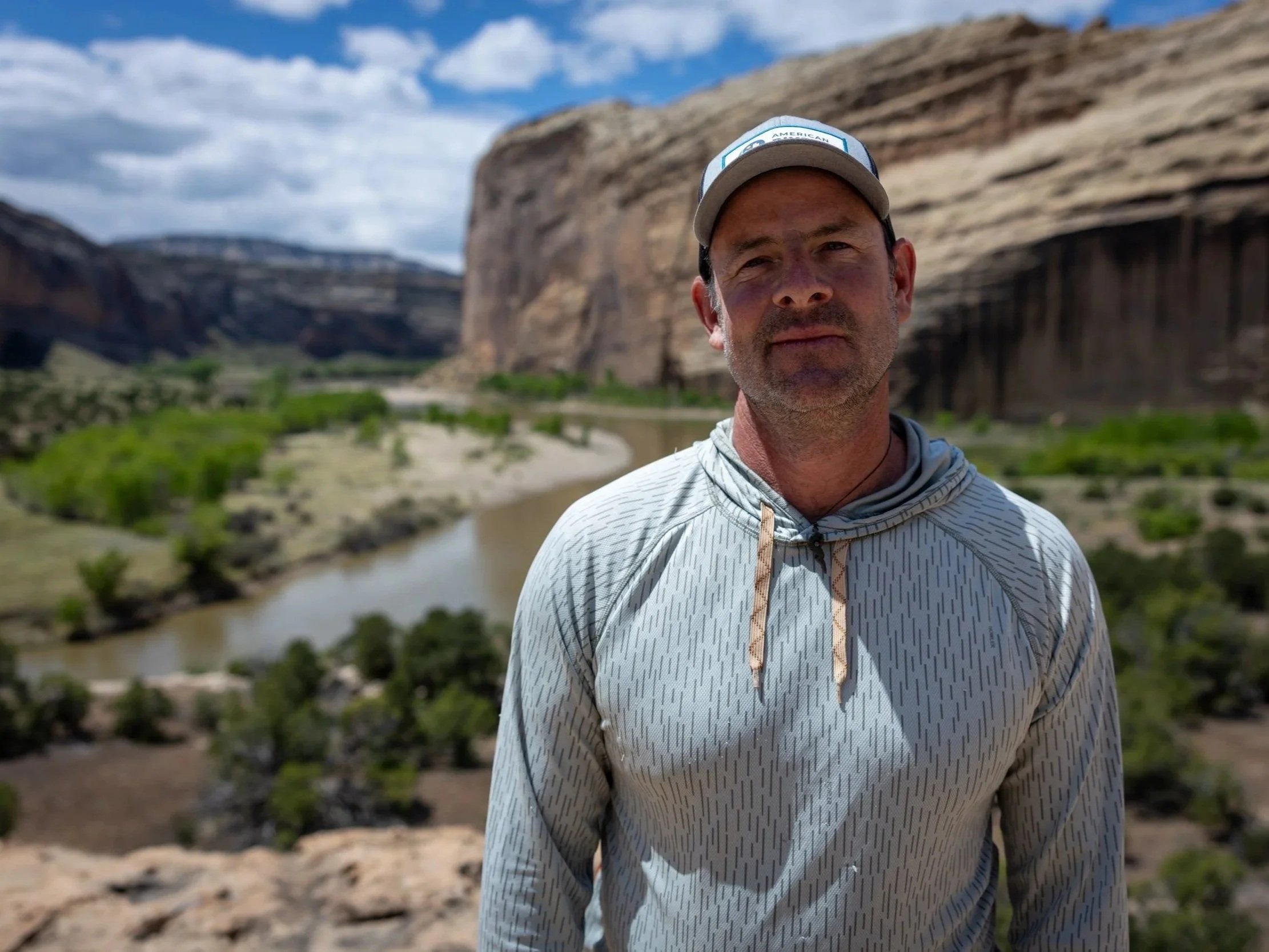
Matt Rice, Southwest regional director for American Rivers, at Echo Park, Colo.
Matt Rice says he’s the luckiest person in the world. As the Southwest regional director at American Rivers, he’s living out his childhood dream of a career in river conservation. He loves that his job is complex, political, and ever-changing, and that it puts him in contact with farmers, water providers, anglers, business leaders, boaters, and elected leaders. Though he gets stuck behind a desk more often than he would like, Matt also enjoys plenty of days on the region’s rivers. Last year, he floated the Yampa River in Northwest Colorado for five days with Carrie and John Morgridge.
We talked with Matt about protecting rivers and wildlife, the impact of wildfires on our waterways, and ongoing concerns about water supply and demand.
How did you first become involved in environmental policy, specifically related to the health and safety of America's rivers and streams, and the day-to-day solutions that flow from there?
Growing up, I was obsessed with rivers. That’s where I could find the coolest animals—crawdads, reptiles, frogs. Then, when I learned to fish, I spent every moment either on a river fishing or thinking about fishing. I worked as a fishing guide through college and graduate school, but at some point, I realized that while I loved fishing, I love rivers even more. At that moment, I decided to study environmental policy and dedicate my career to river conservation.
America has 3.5 million miles of rivers and streams that are essential to the health and welfare of communities—and to wildlife ecosystems. That’s a lot of territory to cover! How do you measure the impact of your work?
A lot of the work we do takes a long time to be realized, whether it’s implementing a multi-million dollar river restoration project or passing federal legislation to protect a particular river. We aim to protect one million miles of river and remove 30,000 dams in the United States by 2050, so we have developed a robust set of metrics to support those goals. Thanks to our many partnerships and support from donors, we are making progress!
How do wildfires impact our water system, and can you talk specifically about the Grand Canyon Dragon Bravo Fire's consequences for the Colorado River?
Wildfires have a huge impact on rivers. The burn scars created by fires can lead to debris flows when it rains and cause serious issues for city water supply systems. Fires harm water quality, impacting fish and bug life, recreation, and irrigation. While wildfires are a natural occurrence, the severity of recent fires in the West is concerning. The Dragon Bravo Fire on the north rim of the Grand Canyon this past summer was especially tragic. Not only did it burn historical buildings like the Grand Canyon Lodge, but its impact will be felt for several years on the Colorado River because of the debris and sediment that will impact the experience for river runners, wildlife habitat, and endangered fish.
How worried should we be about America's water supply, particularly in the West and Southwest?
Everybody should be concerned. Supplies of clean water are diminishing because of hotter and drier conditions, yet demand for water continues to increase. Most of the Southwest has been in a severe drought for 25 years—so long that climatologists are no longer calling it a drought, they are calling it the “aridification” of the West. The Colorado River provides water for 40 million people from the Northern Front Range of Colorado to San Diego. Water drives a multi-trillion dollar economy and facilitates the growth of most of the vegetables eaten in the United States from October to June. The river also flows through some of our most iconic landscapes, like the Grand Canyon, Rocky Mountain National Park, and Canyonlands National Park, providing habitat for fish and wildlife and world-class recreation. If water levels at Lake Powell continue to drop, this could turn off hydropower production, damage infrastructure, and severely harm natural values in the Grand Canyon. Also, the lack of snow this winter will impact water levels in rivers in July, which will have massive consequences to the environment, agriculture, local economies, and basin-wide water security.
Is there a solution?
We know what needs to be done. We need to incentivize flexible policies and funding so we can do more with less water; we need to restore our watersheds and forests at scale; and we need to protect our last, best rivers. We need everybody to get involved and support local conservation and restoration efforts, engage politically on river and clean water issues, and get educated. This is an all hands on deck effort if we want to ensure that the Southwest continues to thrive economically, for nature, and for our food supply.
How can everyday citizens be better stewards of America's rivers and streams?
First, check out American Rivers. We are a great resource, and we provide opportunities to engage to protect rivers regardless of where you live. Also, join your local watershed organization. They will have their fingers on the pulse of the most urgent local issues and will often provide meaningful volunteer opportunities. Talk to your elected officials. Water is a key issue in virtually every community and state in the United States, and there are ample opportunities to participate in public meetings, provide written comments, and make officials and candidates aware that rivers and water are important considerations at the ballot box.
Is there any good news you can leave us with?
Yes! Rivers are resilient! There are numerous examples of rivers that were degraded to the point where it was unhealthy to swim or eat the fish but have recovered significantly because of community support for restoration, smart clean water policy, and investment. For example, people are now swimming and recreating in the Chicago and Cuyahoga rivers, which was unthinkable just a couple of decades ago.
Related Stories